
Last Updated: 6 months ago
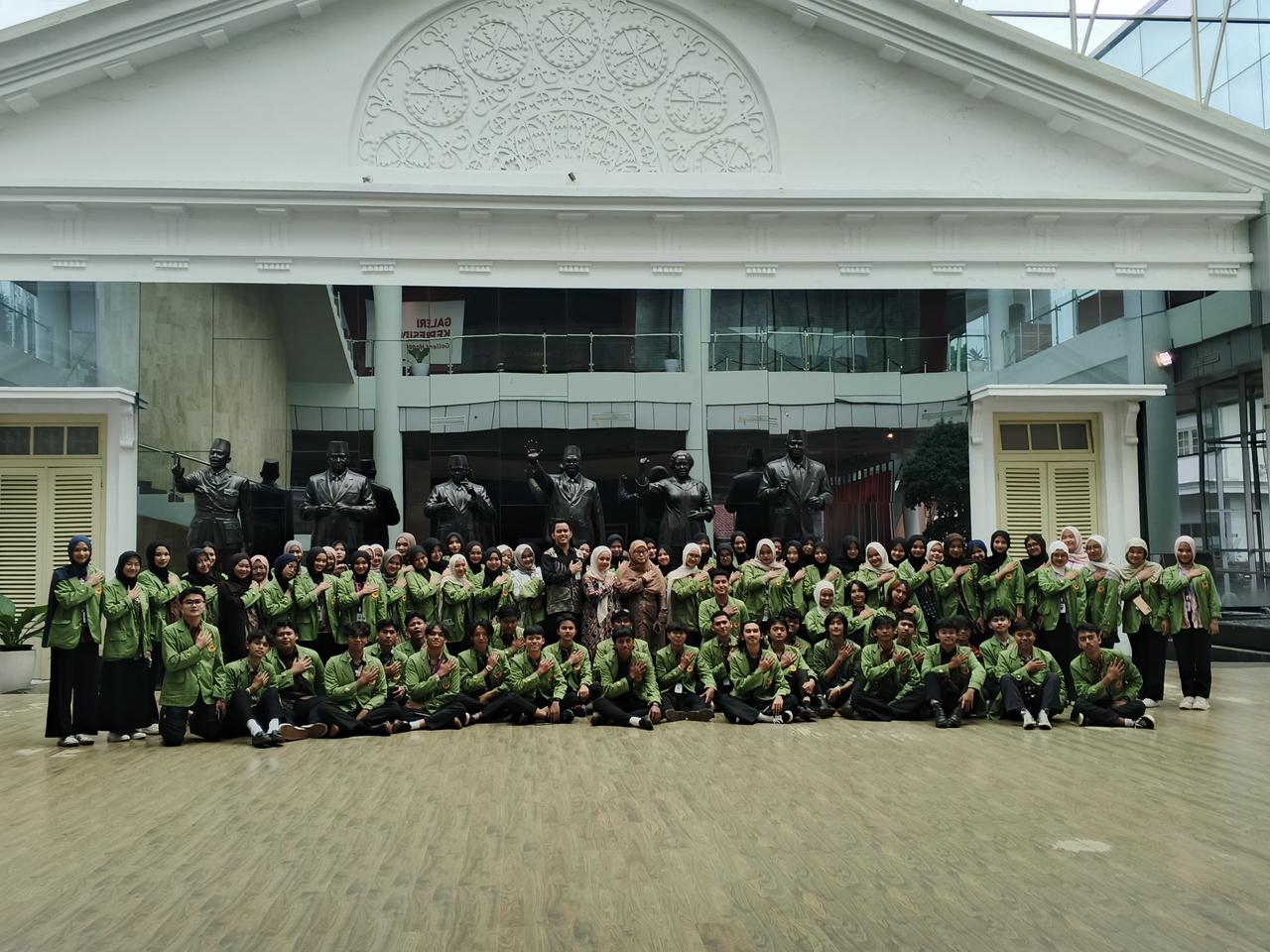
Universitas Djuanda (UNIDA), conducted a study visit to the Balai Kirti Presidential Museum of the Republic of Indonesia at the Bogor Presidential Palace Complex on Saturday (January 17, 2026). This activity formed part of a course project for Pancasila Education, designed using an Outcome-Based Education (OBE) approach.
The visit aimed to provide students with a contextual learning experience. Through direct observation of presidential historical artifacts, students were expected to explore noble values, history, and culture in line with the learning outcomes of the Pancasila Education course coordinated by Prof. Dr. H. Martin Roestamy, S.H., M.H., and Faisal Tri Ramdani, S.Sos., M.A.P., particularly by strengthening their understanding of Pancasila in the life of the nation and the state.
The Dean of FISIP UNIDA, Dr. Hj. Rita Rahmawati, Dra., M.Si., expressed high appreciation for this outdoor learning initiative. In her statement, she emphasized the importance of learning methods that are not confined solely to classroom-based theory.
“Activities like this are highly strategic in supporting the Outcome-Based Education (OBE) curriculum that we implement. We want students not merely to memorize the principles of Pancasila, but to understand how these values were embodied by past national leaders. The Balai Kirti Museum is a perfect living laboratory to study the traces of leadership and statesmanship,” said Dr. Hj. Rita Rahmawati.
Echoing the Dean’s view, the lecturer of the Pancasila Education course, Faisal Tri Ramdani, S.Sos., M.A.P., explained that the output of this visit was a course project requiring students to analyze leadership values.
“Our main objective in bringing students here is to enable them to directly observe the milestones of the nation’s journey through the profiles of the presidents. This is a contextual teaching method, where students are encouraged to reflect on Pancasila values as reflected in every policy and life history of Indonesia’s presidents. We hope they can absorb this spirit of nationalism and translate it into their project assignments,” Faisal explained.
The enthusiasm of the participants was clearly evident throughout the activity. One of the participating students, Wulan, shared her positive impressions of this learning method.
“Learning Pancasila in a museum feels much more alive than just reading textbooks. Here, my friends and I can see the personal belongings and achievements of our presidents firsthand, which makes us even prouder to be part of Indonesia. This visit opened my perspective that Pancasila is truly practiced in the history of our nation’s leadership,” said Wulan.
The group, consisting of students from the Public Administration and Communication Science study programs, concluded the visit with a group discussion session to formulate solutions for their project assignments.