
Last Updated: 5 months ago
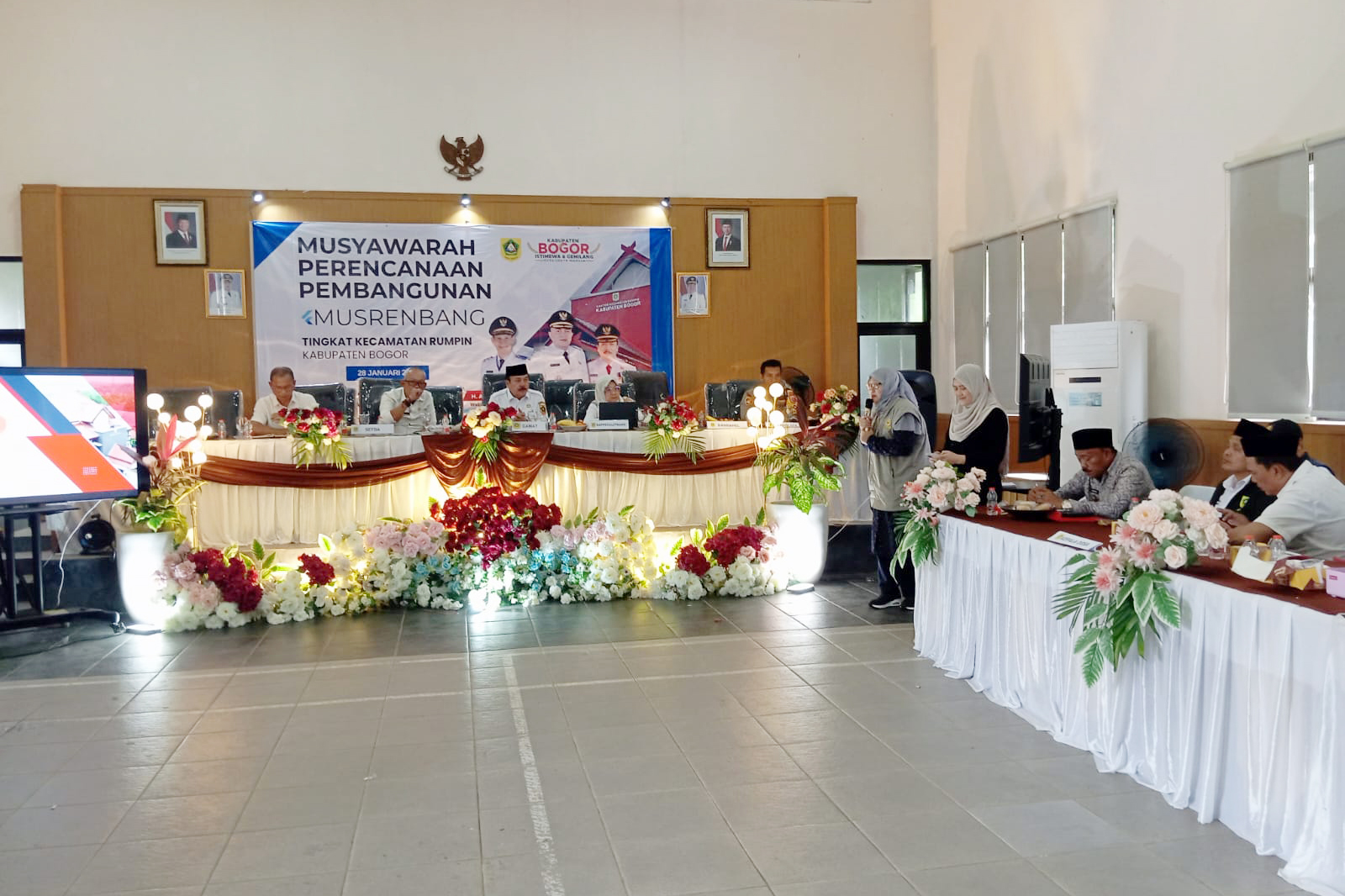
The Faculty of Social and Political Sciences (FISIP) of Universitas Djuanda (UNIDA) took an active role in the Rumpin Sub-District Development Planning Meeting (Musyawarah Perencanaan Pembangunan / Musrenbang) in Bogor Regency on Wednesday (January 28, 2026). FISIP UNIDA’s participation in this strategic forum underscores the faculty’s commitment to supporting village development through the strengthening of human resources by expanding access to higher education.
The delegation was led directly by the Dean of FISIP, Dr. Hj. Rita Rahmawati, Dra., M.Si., accompanied by Maria Fitriah, S.Sos., M.Si., Vice Dean for Non-Academic Affairs of FISIP, and Ridwan Irawansyah, S.Sos., M.A.P., Head of Administration of FISIP. Also in attendance were university leaders, including Arti Yoesdiarti, S.P., M.M., Director of the Directorate of Institutional Marketing (DIM), and Prof. Dr. Hj. Sri Harini, Dra., M.Si., Dean of the Faculty of Economics and Business (FEB), reflecting institutional synergy.
Through the Musrenbang forum, FISIP UNIDA presented its support for the New Student Admission (PMB) scheme under the flagship program of the Bogor Regency Government, namely the One Village One Graduate (Satu Desa Satu Sarjana / SaDeSa) program. The initiative is designed to improve the quality of village human resources by providing access to higher education for high-achieving and economically disadvantaged community members.
The Dean of FISIP UNIDA, Dr. Hj. Rita Rahmawati, Dra., M.Si., emphasized that FISIP’s involvement in the SaDeSa program is part of the faculty’s academic and social responsibility in supporting regional development.
“This aims to expand access to higher education for rural communities and to support the improvement of human resource quality,” she stated.
According to her, the presence of university graduates from each village is expected to create agents of change who understand social issues, village governance, and community development dynamics comprehensively.
With its expertise in social and political sciences, FISIP plays a strategic role in preparing rural youth to become adaptive, participatory, and equipped with leadership capacity.
Currently, FISIP UNIDA offers two study programs: the Public Administration Study Program, which has achieved Excellent (UNGGUL) accreditation, and the Communication Science Study Program, which is accredited as Very Good (Baik Sekali). These accreditation achievements serve as indicators of academic quality and reflect FISIP’s commitment to delivering high-quality higher education that is relevant to regional development needs, particularly in strengthening village governance and development communication.